



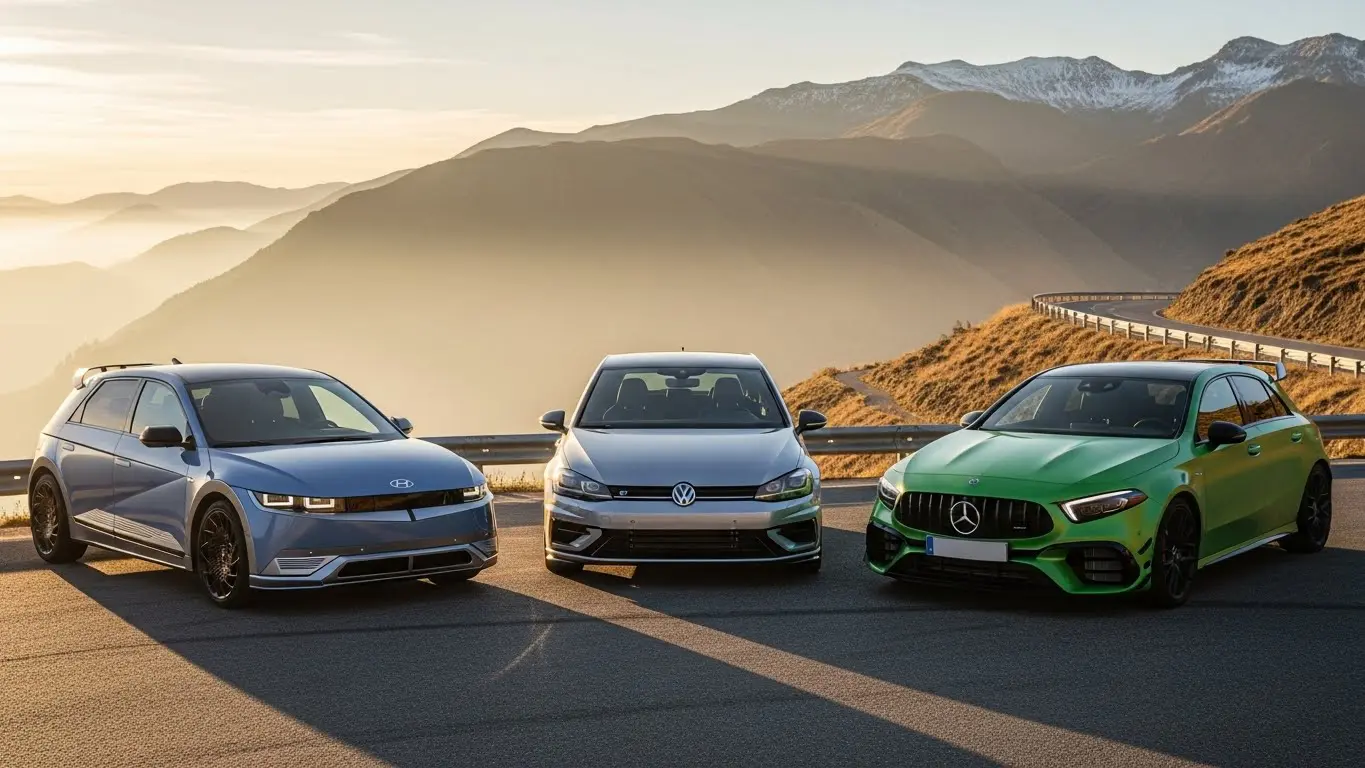
Hyundai Ioniq 5 N vs Volkswagen Golf R 20 Years vs Mercedes-AMG A45 S
The hot hatch category has always belonged to Europe. Volkswagen invented the modern formula with the Golf GTI in 1976. A simple idea took hold: combine everyday practicality with exhilarating dynamics. Mercedes-AMG redefined extremes with the A45 in 2013. It unleashed unprecedented power from a compact package. In 2026 a challenger arrives from South Korea that rewrites the rules entirely. The Hyundai Ioniq 5 N is the first fully electric performance hatch capable of matching, and often exceeding, its combustion rivals on track, road, and pure driving engagement. It produces 601 horsepower normally and 641 in short bursts. It simulates gearshifts. It even generates an artificial exhaust note that has sparked endless debate but cannot be dismissed. Volkswagen responds with the limited Golf R 20 Years edition, a celebration of forty-five years of evolution. Mercedes-AMG counters with the refined A45 S, home to the most powerful production four-cylinder engine ever built.
This comparison pits the three cars that define the pinnacle of hot hatches in 2026. Performance data draws from manufacturer specifications and independent testing by Car and Driver, MotorTrend, EVO, Auto Bild, and Top Gear throughout 2025. Prices are quoted primarily in USD (U.S. market where available), with GBP and EUR equivalents for context where relevant. Each car was evaluated on public roads, closed circuits where permitted, and in real-world conditions. The judgement balances objective metrics with subjective driving feel. One emerges as the new standard bearer.
The Contenders: Background and Evolution
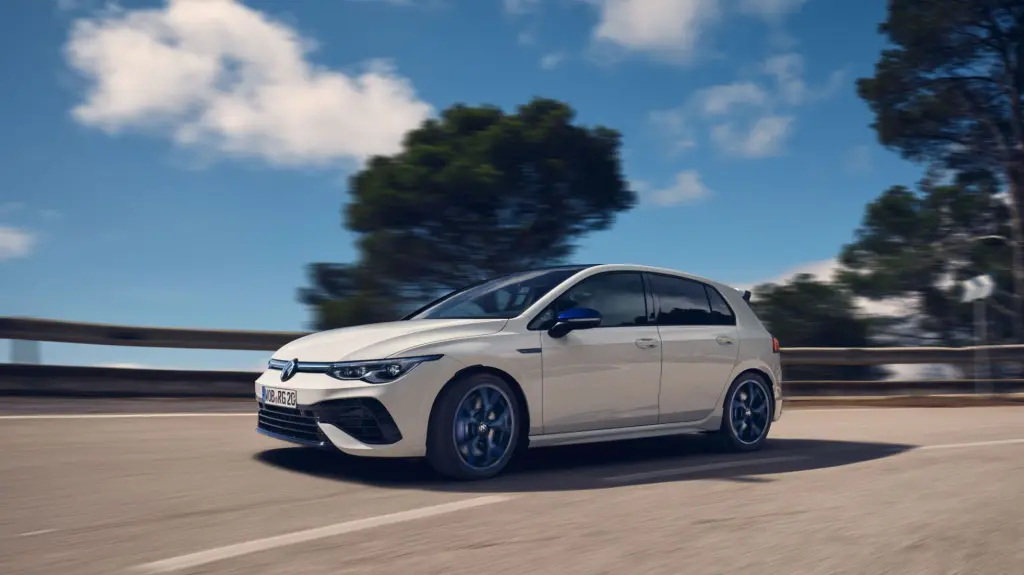
The hot hatch story begins in Europe. Volkswagen’s Golf GTI democratised performance. It combined everyday practicality with exhilarating dynamics. Generations followed. The R variant arrived in 2002 with the Mk4 R32. All-wheel drive and increased power set the template. The 20 Years edition marks two decades of that lineage. Limited to 2,000 units globally, it refines the Mk8 platform with subtle but meaningful upgrades. The 2.0-litre EA888 engine gains 13 horsepower for 328 total in U.S. specification ($48,325 base, rising to $53,435 with options). In Europe the figure reaches 333 horsepower (£52,000 GBP). It includes an Akrapovič titanium exhaust and Emotion Start function that raises idle revs on startup.
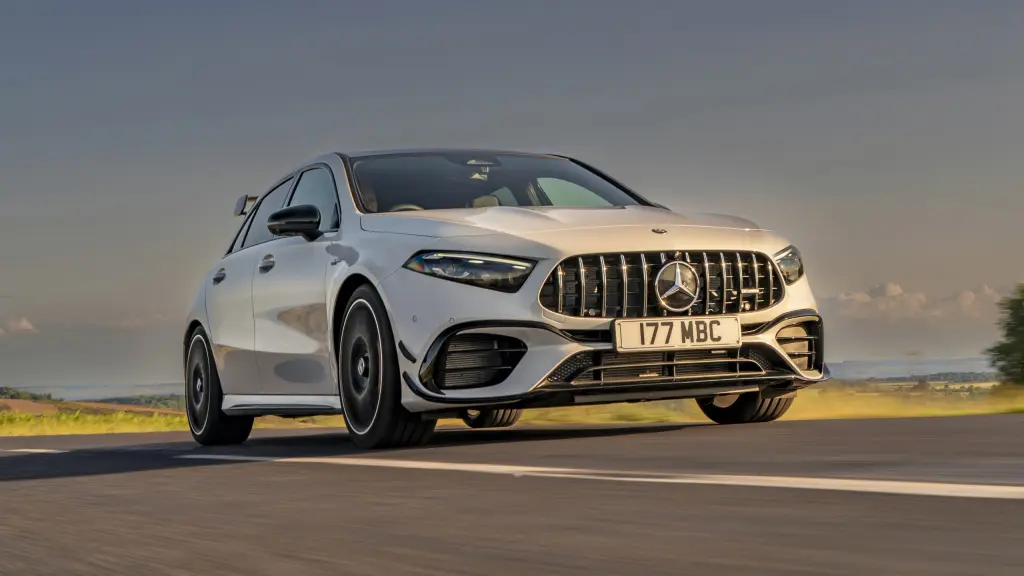
Mercedes-AMG entered later but with unmatched intensity. The first A45 in 2013 shocked the world with 360 horsepower from a 2.0-litre four-cylinder. The second generation raised the bar to 416 horsepower in 2019, then 421 in the S variant. The 2023 facelift added minor cosmetic and chassis tweaks while preserving the hand-built M139 engine’s character. Not officially imported to the U.S., it lists from £63,000 GBP or €73,000 EUR in Europe, roughly $80,000 USD on grey market.
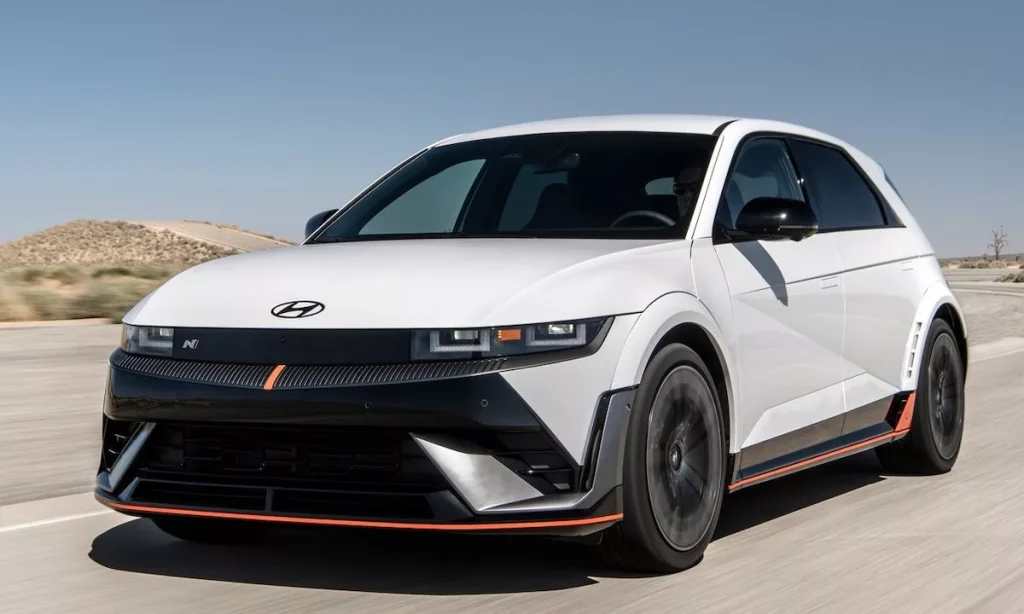
Hyundai’s journey is shorter but steeper. The i30 N in 2017 announced serious intent. The Veloster N refined it. The Ioniq 5 N in 2024 represented a leap into electrification without compromise. Built on the E-GMP platform shared with Kia EV6 GT, it addresses electric performance pitfalls head-on. Extra structural bracing. Wider tracks. Bespoke Pirelli tyres. The result is a 4,850-pound hatch that defies physics. U.S. pricing starts at $67,475 USD.
These three represent different philosophies. Volkswagen refines heritage. Mercedes-AMG pursues absolute intensity. Hyundai embraces the future with bold innovation.
The evolution of the hot hatch reflects changing priorities. Early models focused on lightweight fun. The 1980s saw turbocharging enter the fray. The 1990s brought all-wheel drive. The 2000s emphasised power. The 2010s delivered megahatches with 400-plus horsepower. The 2020s introduce electrification. The Ioniq 5 N arrives at a pivotal moment. Regulations push toward zero emissions. Enthusiasts fear loss of engagement. Hyundai proves the opposite possible.
The Golf R lineage traces directly to the R32. That car introduced Haldex all-wheel drive. Subsequent models refined it. The Mk8 introduced rear torque vectoring. The 20 Years edition adds power and theatre. It remains the benchmark for balanced performance.
Mercedes-AMG’s approach differs. The A45 prioritises outright aggression. The M139 engine is hand-assembled in Affalterbach. Each unit carries a plaque with the builder’s signature. Power density exceeds many supercars. The A45 S represents peak internal combustion in the segment.
Hyundai’s N division draws from rally experience. Engineers tested prototypes at the Nürburgring for years. The Ioniq 5 N incorporates lessons from i30 N and Elantra N. It adds electric-specific innovations like virtual gearshifts and drift modes.
The market context adds urgency. Global CO2 regulations tighten. Europe’s Euro 7 standard looms. The U.S. EPA pushes electrification. Internal-combustion hot hatches face extinction. The Golf R 20 Years may be one of the last pure-petrol icons. The A45 S represents the end of an era. The Ioniq 5 N points forward.
Powertrain and Performance: Raw Numbers and Real-World Delivery
Power delivery defines these cars. The Hyundai relies on dual electric motors producing 601 horsepower and 545 lb-ft normally. N Grin Boost raises output to 641 horsepower and 568 lb-ft for ten seconds. The 84 kWh battery provides 221 miles EPA range under normal driving, dropping to 190 under aggressive use. The 800-volt architecture enables 10 to 80 percent charge in 18 minutes at 350 kW stations.
The Volkswagen uses a development of the EA888 2.0-litre turbo four, now 328 horsepower and 310 lb-ft in U.S. trim (333 horsepower and 420 Nm in European 20 Years spec). The Mercedes-AMG hand-built M139 2.0-litre turbo four delivers 421 horsepower and 369 lb-ft (500 Nm).
Acceleration tells part of the story. The Ioniq 5 N reaches 60 mph in 3.1 seconds per Car and Driver testing, matching Hyundai claims of 3.4 seconds to 62 mph. The A45 S achieves 3.9 seconds. The Golf R 20 Years manages 4.1 seconds.
Top speed varies. Hyundai electronically limits to 162 mph. Volkswagen raises the bar to 167 mph with the R-Performance package. Mercedes caps at 168 mph standard or 174 with the Driver’s Package.
Quarter-mile times highlight the electric advantage. The Ioniq 5 N completes in 11.2 seconds at 124 mph. The A45 S manages 12.0 seconds. The Golf R trails at 12.6 seconds.
Track performance reveals more. The Ioniq 5 N set a 7:45 Nürburgring Nordschleife lap in 2024 testing, fastest among production hot hatches. The A45 S recorded 7:48. The Golf R achieved 7:56.
These numbers matter. They prove the electric car can dominate on paper. Real-world driving tells the rest. The Hyundai’s instant torque launches with violence. The Mercedes builds progressively. The Volkswagen delivers linear, controllable power.
The powertrain differences extend to sound and sensation. The Golf R’s EA888 produces a characteristic turbo growl, enhanced by the Akrapovič system in 20 Years trim. The A45 S’s M139 remains a marvel, revving to 7,200 rpm with a metallic rasp that belies its 2.0-litre displacement. The Ioniq 5 N’s N Active Sound+ system generates three distinct profiles: Ignition mimics a traditional four-cylinder, Evolution adds supercharger whine, Supersonic evokes fighter jets. External speakers broadcast it. Some find it immersive. Others artificial.
Chassis and Handling: Where Feel Lives and Dies
Hot hatches live or die by handling. The Hyundai addresses weight disadvantages cleverly. Reinforced body with 42 additional weld points. Wider tracks front and rear. Electronically controlled limited-slip differential. Adaptive dampers with N-specific tuning. Pirelli P Zero tyres developed exclusively for the car.
The result surprises. Despite 4,850 pounds, the Ioniq 5 N corners with remarkable neutrality. Torque vectoring shuffles power instantly. N Drift Optimiser allows sustained slides with 10 levels of intervention. Brake-based stability control intervenes precisely.
The Volkswagen refines proven architecture. 4Motion all-wheel drive with rear torque vectoring distributes up to 100 percent power to either rear wheel. Adaptive dampers in Race mode firm up without becoming harsh. The Emotion Start function raises idle revs for theatre. Akrapovič titanium exhaust adds aural drama.
The Mercedes-AMG remains the benchmark for front-end bite. 4MATIC+ system with twin-clutch rear axle enables true drift capability. Adaptive dampers offer wide range. Aerodynamic elements generate genuine downforce.
Subjective feel varies. The Golf R provides the most natural steering feedback. Progressive power delivery builds confidence. The A45 S attacks corners with ferocious grip and sharp turn-in. Mid-range surge remains addictive. The Ioniq 5 N impresses with composure and adjustability. Artificial elements divide opinion. N e-Shift simulates eight-speed dual-clutch with torque interruptions. The synthesized sound blends supercharger whine and exhaust crackle.
On track, the Hyundai’s instant torque and tyre grip dominate lap times. The Mercedes feels most aggressive. The Volkswagen offers the most balanced, approachable experience.
Road manners reveal daily character. The Golf R rides compliantly in Comfort mode. The A45 S firms noticeably but remains tolerable. The Ioniq 5 N smooths bumps better than expected, aided by battery placement low in the chassis.
Interior and Practicality: Living With Performance Daily
Hot hatches must function daily. The Hyundai surprises with space. The Ioniq 5 platform delivers 527 litres boot volume and generous rear legroom. N-specific bucket seats with illuminated logos provide excellent support. The dashboard layout mirrors standard Ioniq 5 but adds performance readouts. Materials feel premium. Build quality matches German rivals.
The Volkswagen maintains class-leading interior quality. Carbon trim in 20 Years edition. Illuminated R logos. The 12.9-inch infotainment responds quickly. Seats offer long-distance comfort. Boot space is 374 litres, expanding to 1,230 with seats folded. Practicality remains strong.
The Mercedes-AMG delivers the most luxurious cabin. MBUX system with AMG graphics. Alcantara and carbon accents. Seats grip firmly. Rear space is tightest. Boot measures 370 litres.
Technology favours Mercedes with augmented reality navigation. Hyundai counters with excellent Bose audio and head-up display. Volkswagen integrates seamlessly with wireless CarPlay.
Ownership and Running Costs: The Practical Reality
Pricing positions Hyundai competitively at $67,475 USD base. Volkswagen Golf R 20 Years starts $48,325 USD, rising to $53,435 with options. Mercedes-AMG A45 S, not officially U.S.-sold, lists £63,000 GBP or €73,000 EUR in Europe, roughly $80,000 USD equivalent.
Running costs vary. The Ioniq 5 N achieves 78 MPGe combined EPA. Real-world efficiency drops under hard use but home charging remains inexpensive. Tyre wear is higher due to weight and torque. The Golf R returns 22 city/31 highway mpg. The A45 S manages 28–32 mpg real-world.
Warranty coverage favours Hyundai with 5 years/60,000 miles basic and 10 years/100,000 miles powertrain. Volkswagen offers 4 years/50,000 miles. Mercedes provides similar.
The Verdict: A New Era Begins
The Hyundai Ioniq 5 N claims the crown. It delivers unmatched acceleration, track performance, and innovative engagement. The electric powertrain represents the future, executed with boldness and precision. Value strengthens its case.
The Mercedes-AMG A45 S takes second. It retains unmatched engine character and razor-sharp dynamics. Traditionalists find soul here.
The Volkswagen Golf R 20 Years secures third. It offers the most balanced, approachable package with proven reliability.
The hot hatch throne has moved east. The Hyundai Ioniq 5 N is the new king.


