





The 2026 Guide to Empty-Leg Flights, Jet Cards and Seat-Sharing
Private aviation has long represented the pinnacle of efficiency and discretion. Until recently, it required ownership, fractional shares, or charter rates that made even seasoned executives pause. In 2026 that equation changes fundamentally. The global business-jet fleet has grown to more than 23,800 aircraft, yet average utilisation remains stuck at 38 percent, a direct consequence of the massive delivery wave that began in 2021 and peaked with Bombardier’s 138 Global deliveries in 2024 and Gulfstream’s 172 G700s in 2025. Owners who once flew 600 hours annually now struggle to reach 200. The surplus has created the deepest buyer’s market in the history of the industry.
Empty-leg flights, once a niche curiosity, now account for 38 to 42 percent of all movements in North America and Europe according to the European Business Aviation Association and WingX year-end 2025 reports. Jet-card programs have proliferated beyond 230 distinct offerings, with forty-seven eliminating initiation fees entirely and seventy-one capping fuel surcharges at $300 per hour regardless of crude oil prices. Seat-sharing has moved from experiment to infrastructure: JSX alone carried 682,000 passengers in 2025, Aero 184,000, Tradewind 91,000, and the segment grew 31 percent year-over-year. The result is a landscape where a disciplined traveller can fly privately for the cost of commercial business class, sometimes less, while retaining the private terminal, the legroom, the custom schedule, and the quiet dignity that come with it.
Empty-Leg Flights: The Purest Form of Arbitrage
Every one-way charter creates an empty leg. A client flies a Challenger 350 from London Farnborough to Geneva Cointrin. The aircraft must return to base or reposition for its next booking. That return flight is a fixed cost to the operator whether it carries eight passengers or none. Rather than burn thirty-five or forty-five thousand dollars in fuel for nothing, the jet is listed on the open market at whatever price covers crew salaries, basic catering, landing fees, and a modest broker commission. The discount is usually fifty to seventy-five percent, frequently eighty-five, occasionally ninety.
The underlying economics are transparent. A light jet like the Embraer Phenom 300 or Cessna Citation CJ4 incurs direct operating costs of $3,500 to $5,000 per hour including fuel, maintenance reserves, and crew. A full retail charter adds positioning fees, daily minimums, and broker margins, pushing the quoted rate to $6,200–$7,800 per hour. An empty leg strips away everything except the bare recovery cost, typically landing at $2,200–$4,000 per hour. Midsize aircraft follow the same pattern: a Challenger 350 or Citation Latitude that normally charters for $9,000–$11,000 per hour appears as an empty leg for $3,800–$6,500. Long-range Globals and Gulfstreams see even more dramatic compression on transoceanic repositionings.

Availability concentrates in the highest-traffic corridors. European short-haul is dominated by GlobeAir’s captive fleet of ninety Citation Mustangs and Phenom 100s; four seats from Berlin Brandenburg to Paris Le Bourget for €990 total has become so routine that their app now includes a “repeat last route” button for frequent flyers. North American domestic routes produce hundreds of daily listings through Jettly’s network of more than 5,400 aircraft. VistaJet and XO’s combined platform scans every Bombardier Global and Challenger worldwide; a London Farnborough to Geneva Cointrin empty on a Challenger 605 for £3,500 or a New York Teterboro to Palm Beach International Global 7500 for $9,800 appears several times a week. Mercury Jets curates only U.S. domestic legs and charges no membership fee; Victor in Europe follows the same model and restricts itself exclusively to IS-BAO Stage 3 operators.
The platforms themselves have matured into sophisticated tools. Jettly charges a modest $295 annual fee for priority alerts that arrive within five minutes of listing. Their FlyJets Exchange, launched October 2025 and already processing 1,800 transactions a month, allows strangers to split the cost per seat, turning a $12,000 Miami repositioning into $1,500 a head or a $28,000 transcontinental Gulfstream into $3,500 per seat. GlobeAir’s app push-notifications are so reliable that European executives now treat €990 Berlin–Paris legs as a viable alternative to Eurostar once private terminals and no security are factored in. VistaJet’s dedicated empty-leg tool filters by exact aircraft type and departure window; XO’s app is the fastest for U.S. domestic, allowing non-members to see deals twenty-four hours early for a $2,500 annual membership.
Success with empty legs demands flexibility and speed. Listings typically appear 24 to 72 hours in advance, with 18 to 22 percent cancellation rates according to Icarus Jet’s 2025 audit. The best operators mitigate this with guaranteed recovery: if the leg cancels, XO and VistaJet re-book you on the next available aircraft at the same price. Safety is non-negotiable; every provider highlighted here works exclusively with ARGUS Platinum, Wyvern Wingman, or IS-BAO Stage 3 operators, all publicly verifiable.
The disciplined traveller runs alerts on all five major platforms simultaneously, keeps a packed weekender in the trunk of the car, and treats a 17:00 Friday notification for a 19:30 departure to Aspen at $3,200 total as the starting gun it is. Empty legs are not for the rigid schedule, but for the man who can move when the market moves, they represent the purest form of private-aviation arbitrage available in 2026.
Jet Cards: Predictability Without Ownership
When empty legs disappear, the jet card steps in. A jet card is essentially a prepaid block of flight time at locked hourly rates with contractually guaranteed availability. You deposit anywhere from $50,000 to $400,000 and draw down hours as needed. No repositioning fees, no fuel surcharges above a capped amount, no peak-day multipliers that used to add forty percent on New Year’s Eve or Super Bowl weekend. The market has fractured into three clear tiers that reward different flying profiles.
The legacy giants still dominate the high-volume end. NetJets will sell you twenty-five hours on a Phenom 300 or Citation Latitude for $218,000–$242,000 all-in, guaranteeing an aircraft within ten hours anywhere on earth, backed by a fleet of 780 jets whose average age is 6.8 years and whose safety record remains unblemished. Flexjet’s Red Label program on Challenger 350s, Gulfstream G450s and the new Praetor 600 fleet runs slightly higher but throws in complimentary helicopter transfers in Manhattan, London and Los Angeles, plus de-icing in Aspen and Vail. Both fleets carry ARGUS Platinum and Wyvern Wingman ratings.
The real value in 2026 lies with the disruptors. FlyExclusive, headquartered in Kinston, North Carolina, will lock you twenty-five Phenom 300 hours for $172,500 with no peak days, no initiation fee, and no blackout dates. Wheels Up Core membership gives you turboprop hours for under $5,000 an hour and lets you step up to midsize jets for the difference only, no surcharge, no nonsense. Magellan Jets and Nicholas Air have both moved to pure debit-account models: deposit $100,000 once, fly light jets at $6,200 an hour forever, midsize at $8,900, funds never expire, no blackout dates, no peak-day multipliers. Paramount Business Jets and Air Partner offer similar debit accounts starting at $50,000 with hourly rates from $5,400 on very light jets upward, rollover forever, and no expiry as long as you fly at least once every twenty-four months.
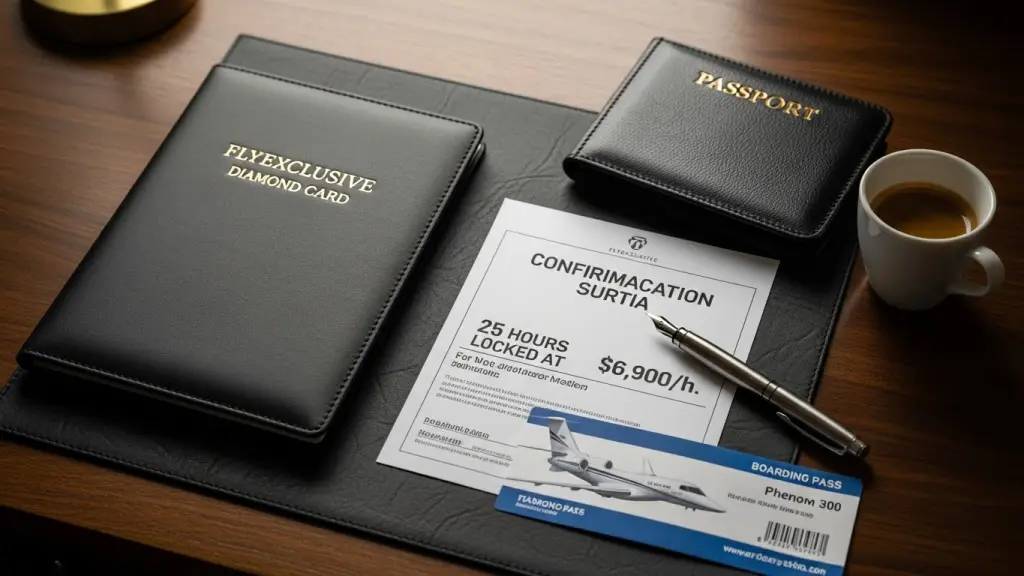
The economics are compelling. A New York Teterboro to Aspen round-trip that costs $92,000 on pure on-demand charter now costs $38,000 on a FlyExclusive or Wheels Up card and can fall to $25,000 if an empty leg materialises first. Short hops benefit most: a 35-minute New York to Nantucket flight that charters for $12,000 costs $4,800 on a card and sometimes $2,200 as an empty leg.
Program selection depends on usage. Under 30 hours a year favours debit accounts. Thirty to seventy hours rewards the disruptors. Above seventy hours the legacy giants’ global reach and recovery guarantees justify the premium. Peak-day policies, pet policies, and catering standards vary; read the fine print on recovery aircraft guarantees and international fees.
Jet cards eliminate the uncertainty that makes empty legs stressful. The executive who values guaranteed execution amortises costs effectively, gaining private terminals, operational control, and the quiet confidence that comes with knowing the jet will be there when he needs it.
Seat-Sharing: The Democratisation That Actually Works
Seat-sharing has finally killed the last excuse that private is too expensive. Two distinct models now dominate 2026.
Scheduled private shuttles run fixed timetables out of private terminals with no security queues whatsoever. JSX operates thirty-seat Embraer 135s and 145s from Burbank to Vegas for $249 one way, from Dallas Love Field to Houston Hobby for $199, and has expanded to forty-six U.S. city pairs including new routes to Florida and the Northeast. Aero’s matte-black sixteen-seat jets do Los Angeles to Aspen for $1,050, New York to Los Cabos for $1,850, and London to Nice for £890, caviar and Acqua Panna included. Tradewind’s Pilatus PC-12 turboprops reach Nantucket, Martha’s Vineyard, St Barths and Anguilla for $995–$1,250 with dogs in the cabin welcome and no weight limits on golf bags. BladeOne runs seasonal Gulfstream G550 service New York–Miami at $2,950 per seat, roughly eighty percent cheaper than chartering the same jet yourself.
Crowdsourced sharing works the opposite way: you post a desired route on XO, Jettly or the new Flyblack app, other members buy the remaining seats, and the cost per person collapses. A Teterboro to Nantucket Phenom 300 filled in eleven hours last month at $1,100 a seat. A London Biggin Hill to Ibiza Challenger 350 filled in seven hours at £1,650 per seat. Flyblack launches across Europe in March 2026 with Erewhon catering and carbon-neutral flights for £450 to £850 London to Ibiza or Geneva.
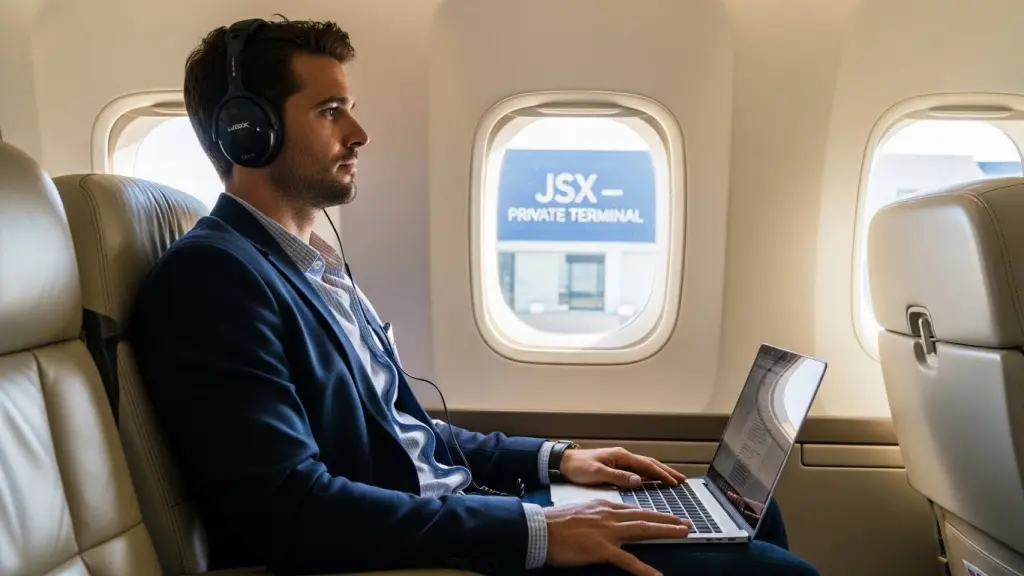
The hybrid strategy that wins in 2026 runs all three layers in parallel. Empty-leg alerts on Jettly, XO, GlobeAir, Victor and Mercury Jets provide opportunistic savings. A $150,000 debit card with FlyExclusive or Magellan guarantees reliability when the empty vanishes. Scheduled shuttles from JSX, Aero and Tradewind handle the eight to ten routes flown repeatedly. A real-world 2025 case study illustrates the power: an executive flew sixty-two hours last year — thirty-eight on empties, eighteen on a FlyExclusive card, six on JSX shuttles — for a total of $138,300. The same itinerary on full charter would have cost $418,000. Savings: $279,700, and every flight avoided a commercial terminal.
Safety has never been higher. Every operator highlighted carries ARGUS Platinum, Wyvern Wingman, or IS-BAO Stage 3 certification — publicly verifiable on the respective registries within seconds. Carbon offsets are now mandatory on NetJets, VistaJet, Wheels Up, FlyExclusive and XO programs. Sustainable aviation fuel blends hit 30 % on West Coast routes and 22 % in Europe, projected to reach 50 % and 40 % respectively by 2028. Electric vertical aircraft from Joby, Lilium and Archer begin FAA and EASA-certified commercial service in summer 2026 on routes under 100 nautical miles, promising $150–$300 per seat from Manhattan heliports to the Hamptons or central London to Oxford.
The playbook is brutally simple. Download Jettly, XO, GlobeAir, Victor, Mercury Jets and Flyblack today and set alerts for your ten most important city pairs. Open a $100,000–$150,000 debit card with FlyExclusive, Magellan, Wheels Up Core or Nicholas Air before 31 December 2025 to lock current rates before the inevitable 2026 increases. Book every scheduled shuttle route you fly more than four times a year — JSX, Aero, Tradewind, BladeOne — because those seats disappear faster than empties. Keep a packed weekender in the trunk, a valid passport in the breast pocket of every suit, and noise-cancelling headphones permanently charged.
Private aviation in 2026 is no longer a status symbol reserved for the Forbes list. It is a market inefficiency waiting to be exploited by the man disciplined enough to treat the sky like any other asset class he intends to dominate. The jets are already in the air, half-empty, burning fuel that someone else is paying for. All that remains is to step aboard and take what is yours.


