




The message from every significant menswear collection this year has been unanimous. Quantity has lost its appeal. Hype-driven drops no longer dictate desire. Instead, the most admired men on the world over are wearing fewer pieces, chosen with greater intention and built to endure far beyond a single season. This is not minimalism for its own sake. This is the deliberate pursuit of quality, versatility and longevity.
A well-curated wardrobe in 2025 contains perhaps twenty to thirty core items, each selected because it performs multiple roles, flatters the body and improves with age. The goal is simple: open the wardrobe each morning and feel that every option is correct, comfortable and quietly confident.
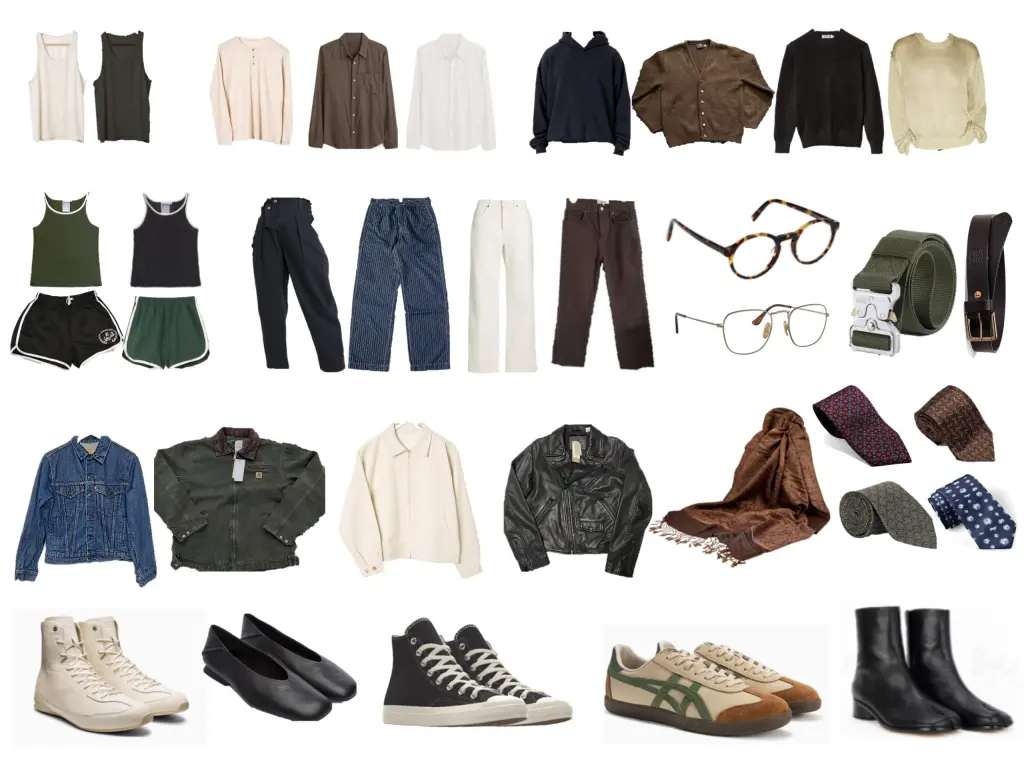
Begin with outerwear, the category that defines first impressions and signals taste. One outstanding coat will outperform five mediocre ones. For most climates and lifestyles the optimum choice remains a navy or charcoal single-breasted overcoat in a heavy melton wool or a cashmere-wool blend weighing at least 800 grams per metre. Cut slightly roomier than the trends of the late 2010s, it accommodates knitwear underneath yet retains a defined shoulder and a waist that gently tapers. Such a coat works with tailoring on Monday, with denim and boots on Saturday, and with a roll-neck and flannel trousers on Sunday evening. Brands such as Loro Piana, Zegna, Private White V.C. and a handful of Neapolitan houses still produce versions that will outlast a decade of daily winter use.
Underneath that coat, the backbone of the wardrobe is knitwear. A mid-gauge merino wool crew neck in navy, charcoal, camel and bottle green covers almost every eventuality. Merino resists odour, regulates temperature and can be worn several times between washes if aired properly. Add two cashmere roll-necks, one black and one oatmeal, for colder months and formal evenings. A heavier Shetland crew neck in a muted rust or olive introduces texture without demanding attention. These five or six knits, rotated carefully, replace the dozens of graphic sweatshirts that once dominated younger wardrobes.
Shirting has undergone the same refinement. Crisp white and pale blue oxford cloth button-downs remain indispensable, but the modern wardrobe also requires a small selection of softer options. A brushed cotton shirt in mid-grey or a faded indigo chambray offers comfort on travel days yet looks deliberate when tucked into tailoring. Two or three high-quality T-shirts in white, grey melange and black, cut from long-staple cotton with a subtle slub texture, serve as layering pieces beneath open shirts or under unbuttoned knitwear.
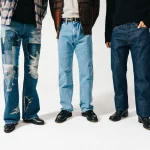
Trousers present the clearest evidence of evolving proportions. The dominant silhouette is a pleated, high-rise trouser with a gentle taper toward the hem. Wool fresco for spring and summer, cavalry twill or flannel for autumn and winter. Neutral colours dominate: mid-grey, tobacco, dark navy and charcoal. These trousers pair equally well with loafers and a knit polo for weekend lunches or with a tailored jacket and tie for client meetings. Denim has not disappeared, but the preferred cut is now straighter and slightly cropped, in a deep indigo rinse or a tasteful raw selvedge that ages gracefully. One outstanding pair in each category is sufficient.
Footwear follows the same principle of reduction. A pair of dark brown suede loafers, a black cap-toe oxford, a rugged tan leather boot and a clean white leather trainer cover ninety-five percent of occasions for the urban man. Materials matter enormously. Look for full-grain leather, Blake or Goodyear welted construction and replaceable soles. When maintained with cedar shoe trees and occasional polishing, these four pairs will serve for years.
Accessories have been stripped back to essentials that add character without shouting. A reversible leather belt in black and brown, a silk knit tie in navy, a woven grenadine in black, a stainless steel watch with a simple dial and a supple leather strap. A cashmere scarf in charcoal and a lightweight linen square for summer complete the list. Jewellery, if worn at all, is limited to a single signet ring or a thin chain necklace.
The financial case for this approach is compelling. A wardrobe constructed along these lines costs more initially than fast-fashion alternatives, yet the cost per wear plummets dramatically. A $1,150 overcoat worn two hundred times over ten years costs $5.75 per wear. A $60 synthetic puffer discarded after one season costs more in both money and environmental impact.
Sustainability underpins the entire movement. Younger consumers, now the primary buyers of luxury menswear, insist upon traceability, low-impact production and durability. Brands have responded with lifetime repair programmes, take-back schemes and increased use of recycled cashmere, organic cotton and vegetable-tanned leathers. Purchasing one jacket from a responsible maker is no longer a compromise on style; it is the only rational choice.
Personal style emerges not from accumulation but from restraint. When every garment is chosen for its craftsmanship and versatility, combinations become intuitive. A navy roll-neck with grey flannel trousers and suede loafers reads differently from the same roll-neck with raw denim and rugged boots, yet requires no additional shopping. The wardrobe functions as a system rather than a collection of statements.
Maintenance becomes part of the ritual. Garments are steamed rather than dry-cleaned where possible. Knitwear is hand-washed in cool water and dried flat. Shoes are brushed after each wear and polished monthly. These small acts extend lifespan and deepen attachment. Ownership shifts from consumption to stewardship.
For the man building this wardrobe from scratch, a suggested starting dozen might include:
- Navy wool overcoat
- Charcoal flannel suit (worn as separates)
- Mid-grey fresco wool trousers
- Dark indigo raw denim
- Three merino crew-neck knits (navy, camel, bottle green)
- Two cashmere roll-necks (black and oatmeal)
- Four oxford cloth shirts (two white, two pale blue)
- Two casual shirts (grey brushed cotton, indigo chambray)
- Dark brown suede loafers and black oxfords
- Cashmere scarf and leather belt
- Stainless steel watch
- One tailored lightweight jacket for summer evenings
From this foundation, additions are deliberate and infrequent: a shearling aviator jacket after three years, a tobacco corduroy suit after five, perhaps a hand-knitted cricket sweater in cream when the budget and occasion align.
The result is a uniform that never feels uniform. The clothes adapt to the man rather than the man constantly adapting to trends. Confidence grows from knowing that nothing in the wardrobe is superfluous, nothing is disposable, and everything is ready.
2025 marks the moment when dressing well ceased to be about keeping up and became about opting out of the cycle altogether. The most stylish men are no longer the ones with the most clothes, but the ones who need the fewest. Their wardrobes are quieter, calmer and considerably more powerful as a result.