



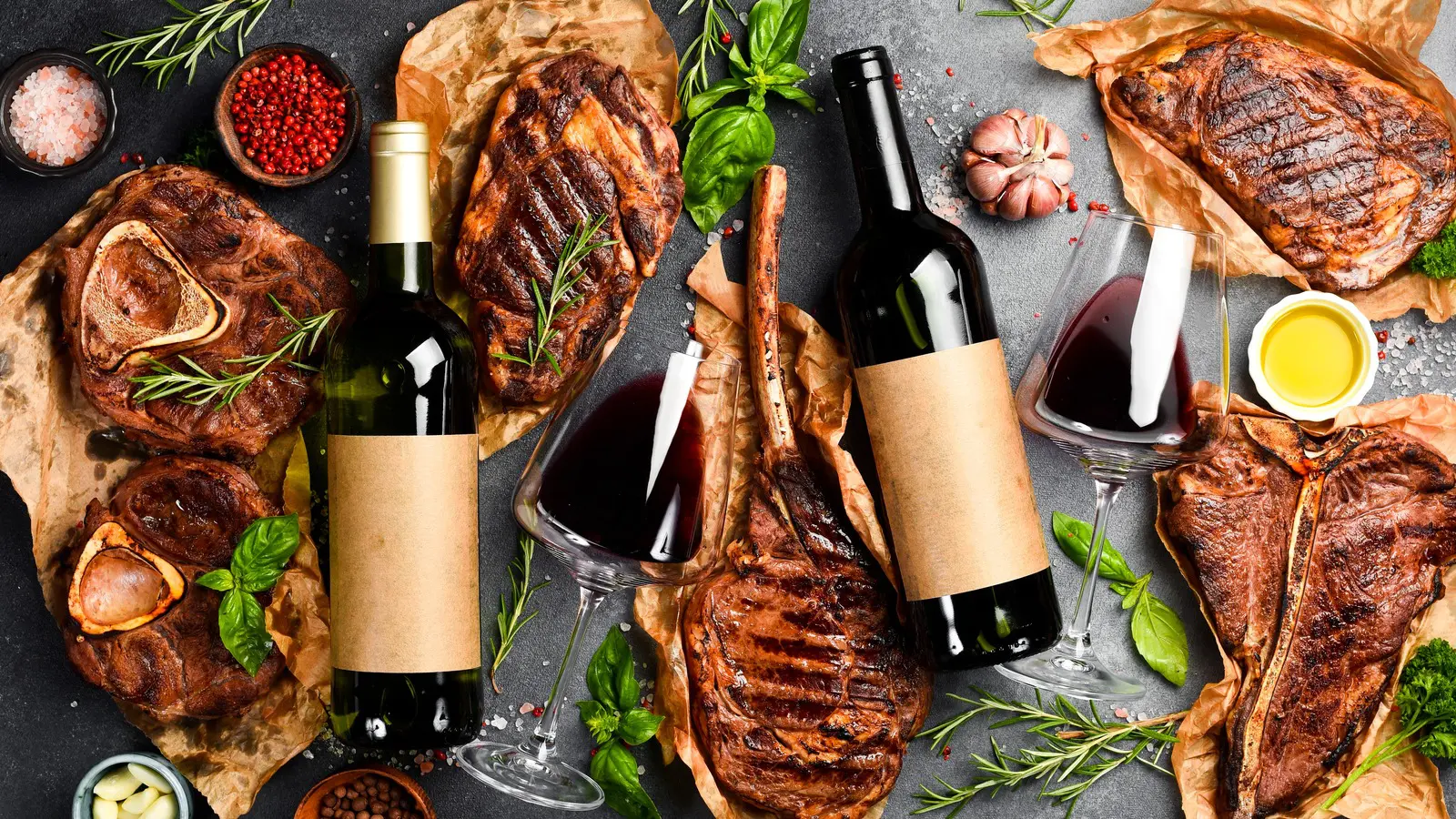

Most men will cook hundreds of steaks in their lifetime. The majority will be forgettable. A small minority will be remembered for years. The difference lies not in gadgets or marinades but in choosing the correct cut for the moment and treating it with precision. These five steaks, when mastered, cover every occasion from solitary supper, date-night dinner, Sunday gathering with friends, or the rare celebration that demands reverence. Learn them in this order.
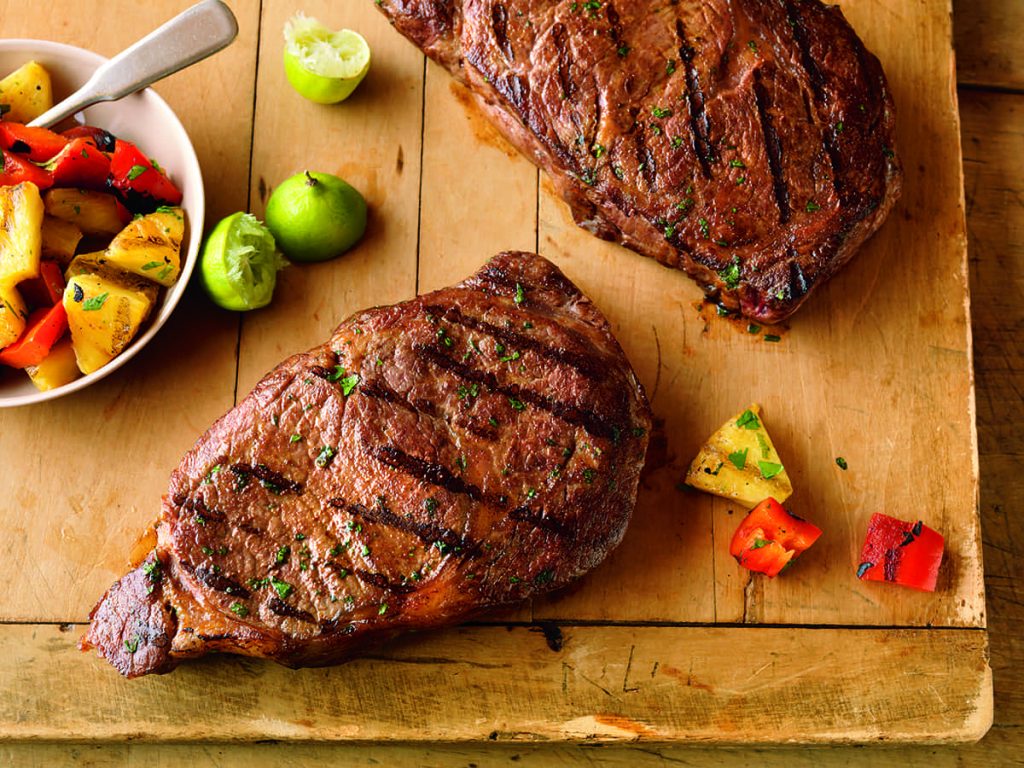
1. Ribeye
The gateway steak. Generous intramuscular fat (marbling) makes it almost impossible to ruin, yet it rewards skill with profound flavour.
Specifications
- Minimum 300 g (10–12 oz) bone-off, or 500–600 g bone-in (cowboy cut)
- Dry-aged 28–45 days
- Minimum 3 cm (1.2 inches) thick
- Marbling score: USDA Prime or Australian Wagyu MBS 4–6
Method
Season aggressively with coarse sea salt twenty minutes before cooking. Use a heavy cast-iron skillet or direct heat on a charcoal grill. Sear 90 seconds per side over maximum heat to form crust, then move to indirect 130 °C (250 °F) zone until internal temperature reaches 52 °C (125 °F) for rare or 55 °C (130 °F) for medium-rare. Rest ten minutes loosely tented. Nothing else is required; pepper only after slicing.
Wine
Bold Napa Cabernet Sauvignon or Barossa Shiraz.
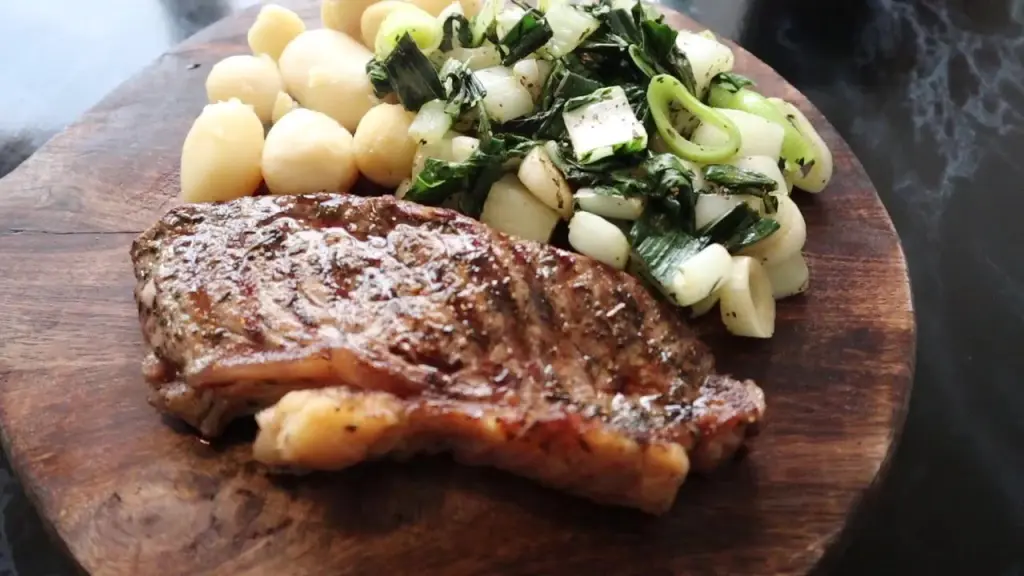
2. Entrecôte (Ribeye with the cap off, known as sirloin in some countries)
The steak for when you want refinement without losing intensity. Same rib primal as ribeye but with the spinalis (the flavourful cap) removed, leaving a leaner, more uniform eye.
Specifications
- 280–350 g
- French Limousin or Argentine Angus preferred
- Wet-aged 21 days minimum, dry-aged preferred
- Thickness 3.5–4 cm
Method
Reverse-sear is ideal. Oven at 110 °C (230 °F) until internal 48 °C (118 °F), then 60-second sear in foaming butter with thyme and garlic. Slice against the grain; the texture is silkier than ribeye, the flavour cleaner.
Wine
Left-Bank Bordeaux (Pauillac or Saint-Julien) or cool-climate Tuscan Sangiovese.
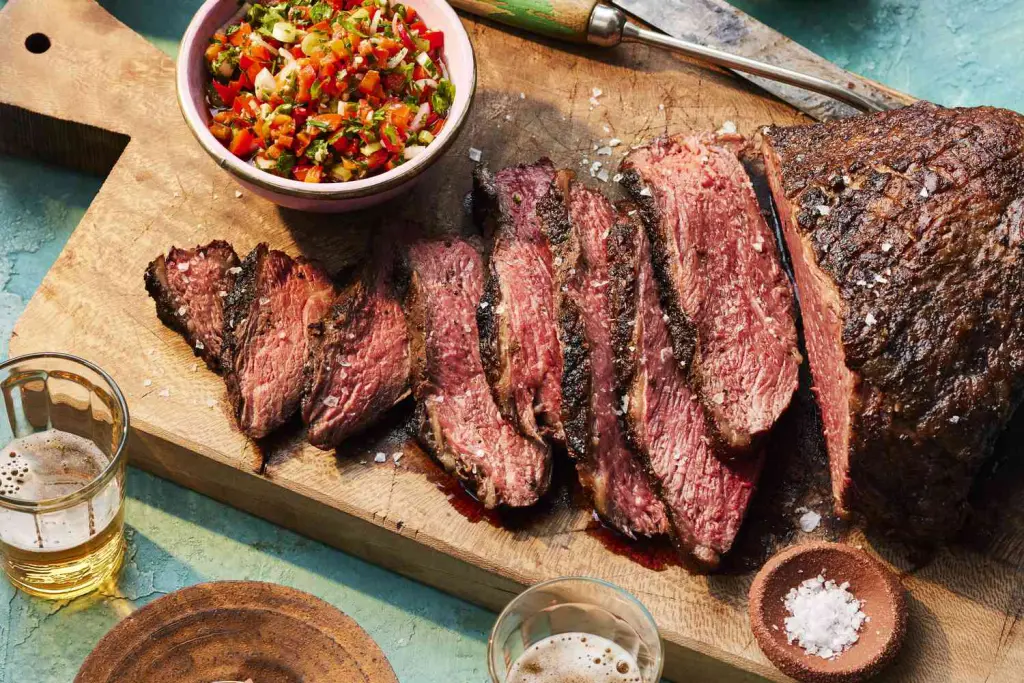
3. Picanha (Rump cap / Coulotte / Sirloin cap)
The Brazilian national steak, now essential knowledge for any serious carnivore. A triangular cut with a thick fat cap that renders into liquid gold.
Specifications
- Whole piece 1–1.5 kg, sliced into 3–4 cm steaks with the fat cap intact
- South American grass-fed (Uruguayan or Argentine) for mineral depth
- Never trimmed below 1 cm fat layer
Method
Score the fat cap in a cross-hatch. Salt heavily one hour ahead. Cook fat-side down first over medium coals until the fat renders and crisps (8–10 minutes), then flip and finish to 54 °C (129 °F) internal. Rest five minutes, slice thinly against the grain. Serve with chimichurri or simply coarse salt.
Drink
Malbec from Mendoza or a cold caipirinha.
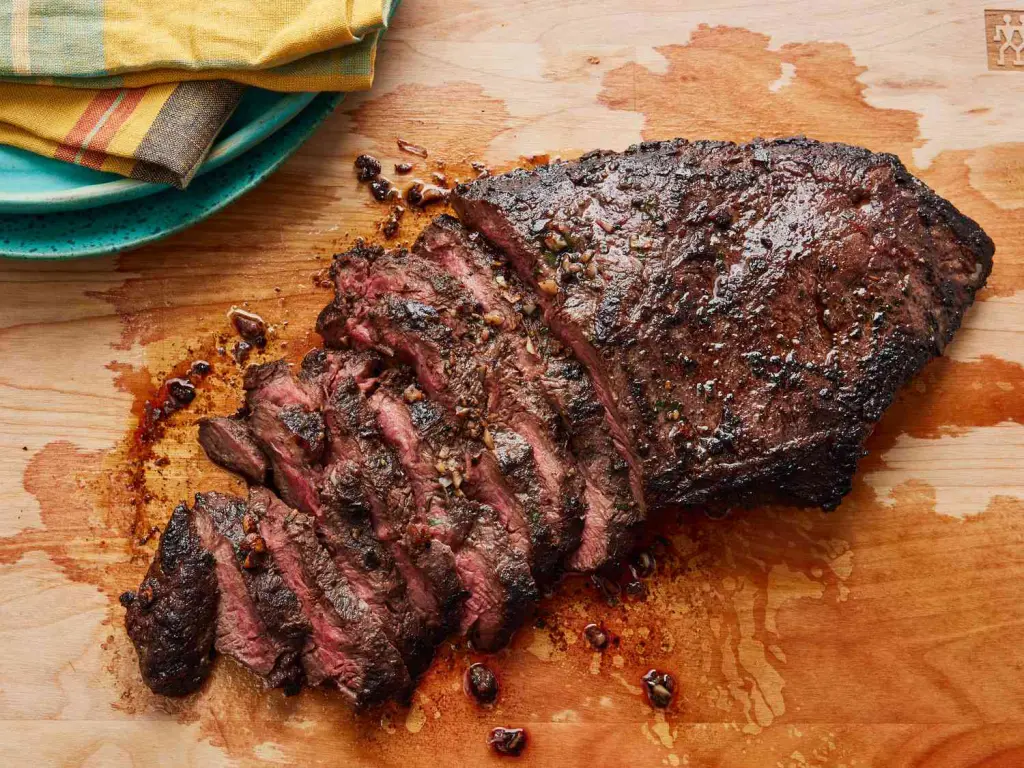
4. Flat-Iron (Top blade / Oyster blade)
The undervalued shoulder cut that delivers wagyu-like tenderness at a fraction of the price. A thin line of connective tissue runs through the centre; proper butchery removes it, leaving two mirror-image steaks.
Specifications
- 200–250 g per portion
- 35–50 days dry-aged for maximum tenderness
- Thickness 2.5–3 cm
Method
High-heat griddle or plancha. 90 seconds per side for rare, no more. The grain runs diagonally; slice correctly and the texture is buttery. Ideal weekday steak that tastes like the weekend.
Wine
Northern Rhône Syrah or Priorat.
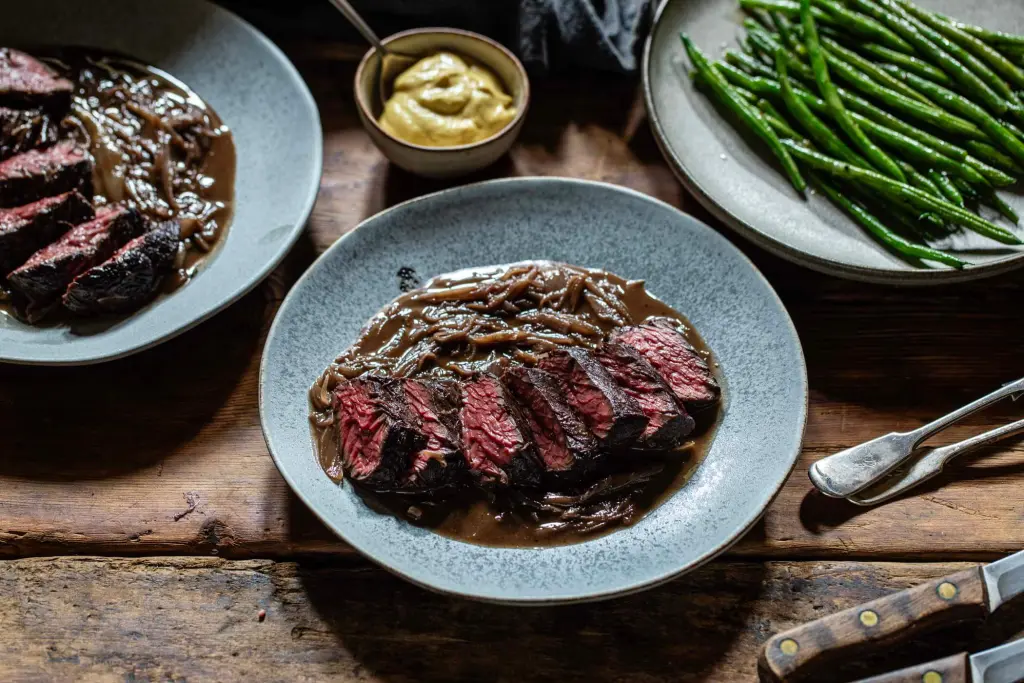
5. Onglet (Hanger steak)
The butcher’s traditional secret. Only one per animal, intensely beefy, loose texture, best served rare. The single most flavourful cut on the carcass.
Specifications
- 220–280 g whole, trimmed of sinew
- Wet-aged 21–28 days (dry-ageing can make it too strong)
- Must be cooked whole, rested, then sliced against the grain
Method
Remove from refrigerator two hours ahead. Season lightly. Sear in ripping-hot carbon-steel pan 2 minutes per side. Target internal 50 °C (122 °F). Rest eight-minute rest is non-negotiable. Classic accompaniment: shallots slowly cooked in butter and red-wine vinegar.
Wine
Chinon Cabernet Franc or mature Rioja Reserva.
Final Notes on Execution
- Temperature control is everything. A accurate instant-read thermometer is not optional.
- Resting is half the cook. Ten minutes minimum for thick cuts.
- Salt early and generously; Maldon or fleur de sel for finishing.
- Cast iron retains heat better than non-stick. Carbon steel seasons faster.
- Wood or lump charcoal beats gas every time, but a scorching-hot cast-iron skillet indoors is perfectly respectable.
Master these five steaks and you will never again need a restaurant menu to impress. More importantly, you will understand beef at a level most professional chefs never reach. The rest (tomahawk theatrics, Japanese A5 theatrics, truffle butter nonsense) is noise. These five are signal.



