



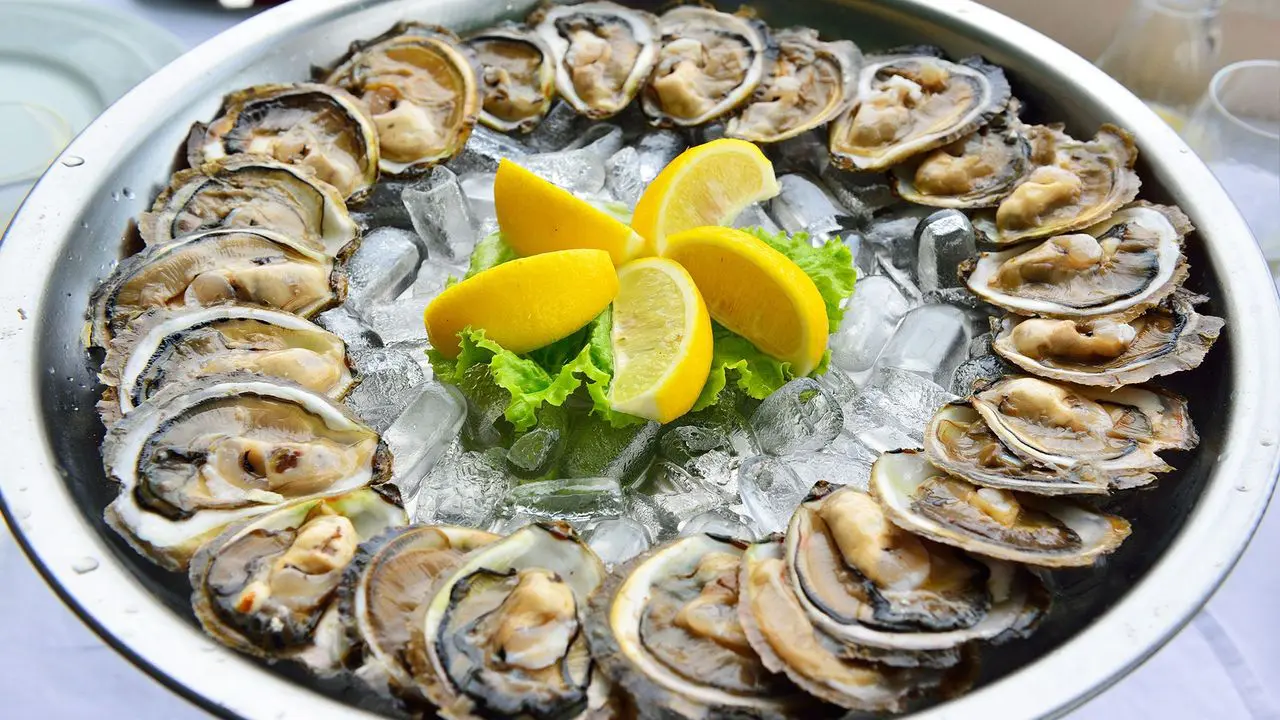

There is no food that separates the novice from the quietly confident man faster than a dozen raw oysters. One awkward slurp, one nervous glance at the mignonette, one hesitant request for Tabasco, and the table knows exactly where you stand. The following pages exist for one purpose: to ensure that never happens again. By the time you finish reading, you will order, open, sauce and eat oysters with the calm authority in any restaurant on earth.
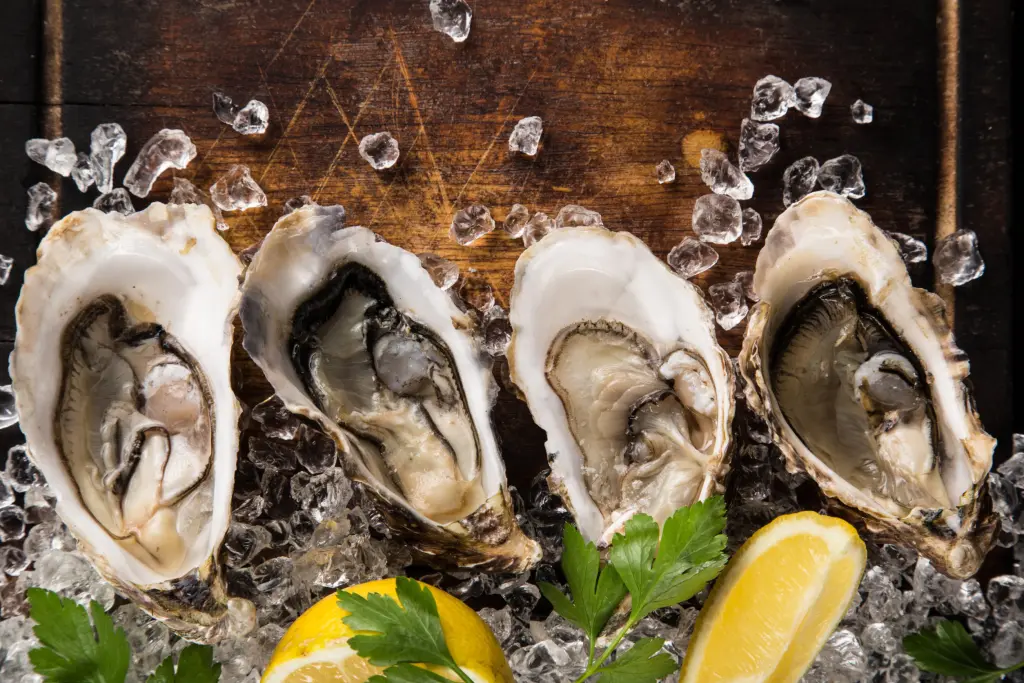
The Six Species You Must Know
Forget the dozens of marketing names. Only six oysters truly matter for flavour, texture and occasion.
- Fine de Claire (France, Marennes-Oléron)
Moderate salt, crisp flesh, pronounced cucumber and mineral finish. The everyday oyster of Paris brasseries. - Gillardeau (France, Normandy or Ireland)
Fatter, firmer, nutty sweetness with a long hazelnut aftertaste. The Rolls-Royce that still feels understated. - Kumamoto (USA, Washington State or British Columbia)
Small, deeply cupped, creamy, almost melon-like sweetness. The oyster that converts people who claim they dislike oysters. - Sydney Rock (Australia, New South Wales)
Tiny, coppery, intense iodine and seaweed. Higher price per piece but unmatched complexity. - Belon (France, Brittany – true Belon river only)
Flat shell, metallic, almost iron-like intensity. Wild, rare, divisive. Order only if you see “Belon 000” or “Belon plate”. - Maldon or Colchester Native (UK, Essex)
When in season (September–April), the deepest, most savoury oyster in Europe. Creamy, long, faintly mushroom finish.
Everything else is honourable but secondary.
Ordering with Precision
Never ask for “a dozen mixed.” Instead:
- In France: “Trois de chaque numéro, s’il vous plaît.” (Three of each number on the board.)
- In the United States: “Two of each Pacific and two of each Atlantic you recommend today.”
- In London: “Six Colchester number twos and six Carlingford Lough, please.”
Always request the oysters be opened in front of you if possible, or at least within sight. A good oyster man will tilt each shell to show the liquor is full and clear before plating.
The Tools You Own for Life
Buy these once and keep them forever.
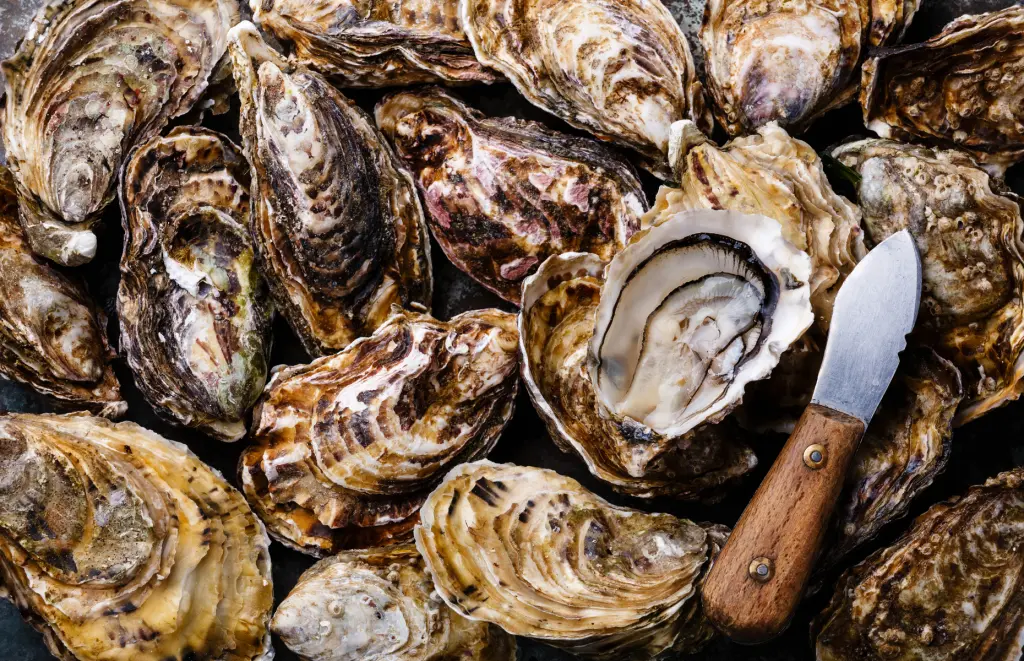
- A proper oyster knife with guard (Laguiole or Déglon Sabatier, €35–€60).
- A thick tea towel for grip.
- A small stainless steel bowl for discarded liquor if you choose to rinse (most experts do not).
- A sturdy wooden board with a depression or a dedicated oyster tray.
Opening an Oyster Without Drama
- Hold the oyster deep-cup down, flat side up, hinge toward you, wrapped firmly in the towel.
- Insert the knife tip into the hinge at a 30-degree angle. Do not force. Twist gently until you feel the pop.
- Slide the blade along the top shell to sever the adductor muscle.
- Lift the top shell, wipe the blade clean on the towel, then slide under the oyster to cut the lower muscle.
- Leave the oyster in the deep half-shell, check for shell fragments, tip away the first cloudy liquor if it smells of low tide, allow the oyster to produce its second, clear liquor.
A confident man opens a dozen in under eight minutes without blood or broken shells.
Temperature Is Everything
Oysters must be cold but never frozen. Ideal serving temperature is 6–10 °C. If the plate arrives with crushed ice that is actively melting and pooling, send it back. Waterlogged oysters are ruined oysters.
The Only Three Acceptable Accompaniments
- Freshly squeezed lemon
One wedge per three oysters. A single drop, no more. Lemon should brighten, never dominate. - Mignonette – classic and only classic
100 ml best red-wine vinegar (Cabernet or Banyuls)
1 shallot, brunoise so fine it is almost paste
8 turns of white pepper from the mill
Nothing else. No sugar, no raspberry, no yuzu. Prepare one hour ahead and keep cold. - Nothing
The highest expression. A great oyster needs nothing except the memory of the sea.
Everything else – Tabasco, cocktail sauce, horseradish, granita, Kilpatrick, Rockefeller – is concealment.
The Correct Way to Eat
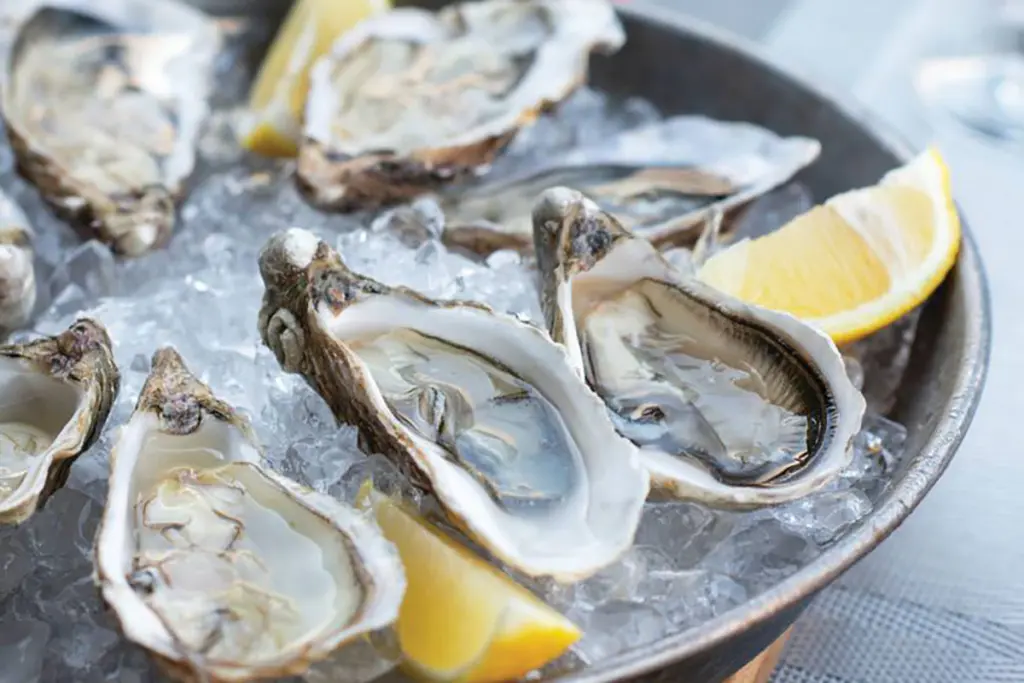
- Lift the shell to your lips. Do not use the tiny fork unless the oyster is stubbornly attached.
- Tip the shell gently so the oyster and all its liquor slide into your mouth in one motion.
- Chew two or three times. Oysters are not shots. Texture and flavour develop on the palate.
- Swallow. Exhale through the nose to catch the finish.
Champagne and Other Drinks
- Champagne: vintage or top non-vintage Blanc de Blancs (Krug Clos du Mesnil, Jacques Selosse, Taittinger Comtes). Brut Nature or Extra Brut only.
- White wine: bone-dry Muscadet sur lie, Chablis Premier Cru, or Assyrtiko from Santorini.
- Beer: Guinness Foreign Extra or a crisp pilsner (Pilsner Urquell, Rothaus).
- Spirits: ice-cold vodka or gin served from the freezer, no mixer.
Avoid red wine, cocktails, or anything sweet.
Seasonality and Storage
Oysters are at their best when sea temperature is below 12 °C. In the Northern Hemisphere this means September to April. The old “no R-month” rule is outdated thanks to modern refrigeration, but summer oysters are still milkier and riskier. Buy only from suppliers who can name the harvest date (printed on the sack). Store flat, cup-side down, covered with damp cloth in the coldest part of the refrigerator (never the freezer) for maximum five days.
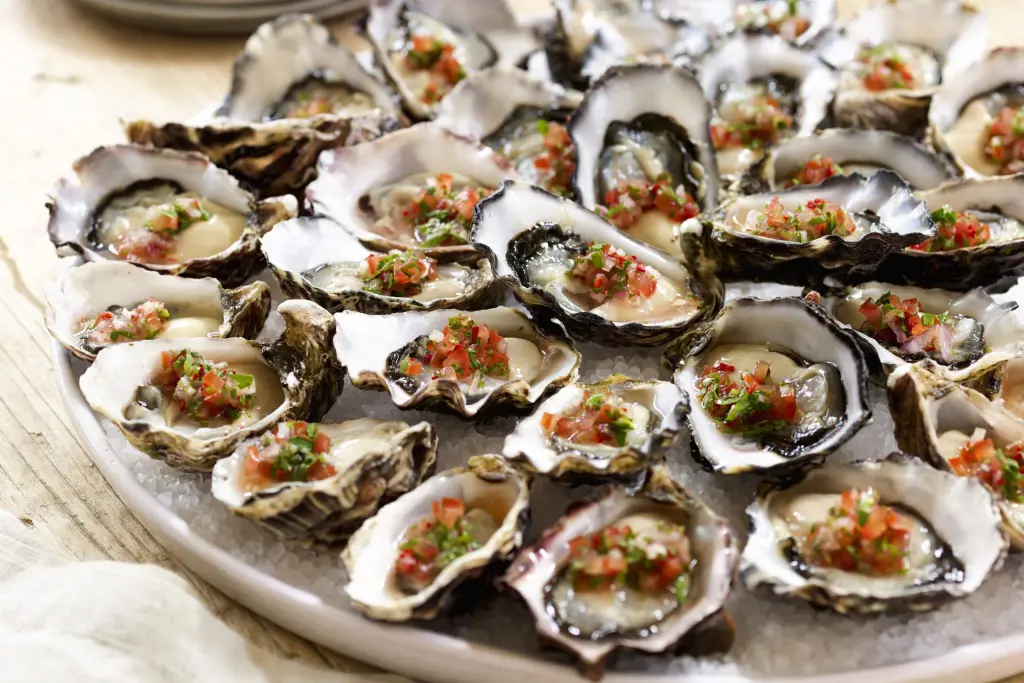
Etiquette Notes That Still Matter
- Never ask for oysters in a restaurant that smells of anything except the sea.
- Do not clap shells together to check freshness; smell is the only test.
- Do not dunk bread in the communal mignonette.
- Tip the oyster shucker separately if he has performed well.
- When hosting at home, open the oysters no more than thirty minutes before guests arrive.
The Final Test
Next time you sit down to a dozen, order three different types, apply lemon to one of each only, and taste them side by side. You will immediately understand salinity, sweetness, minerality and finish in a way no menu description ever could. From that moment forward you will order with certainty, eat with pleasure, and never again look like a man who is trying.
That is how you eat oysters like you have been doing it forever.



